Understanding the Difference: Standard Overlay, Full Overlay, and Inset Cabinets
Ever notice how some kitchens feel polished and expensive while others read as purely practical? A big part of that impression comes down to how the cabinet doors and drawer fronts relate to the cabinet box. Interior designers and cabinetmakers generally group these approaches into three main styles: standard overlay (also called partial or traditional overlay), full overlay, and inset. Each creates a distinct look, comes with its own cost and practical trade-offs, and pairs best with certain design styles.
The Foundation: Face-Frame Cabinets
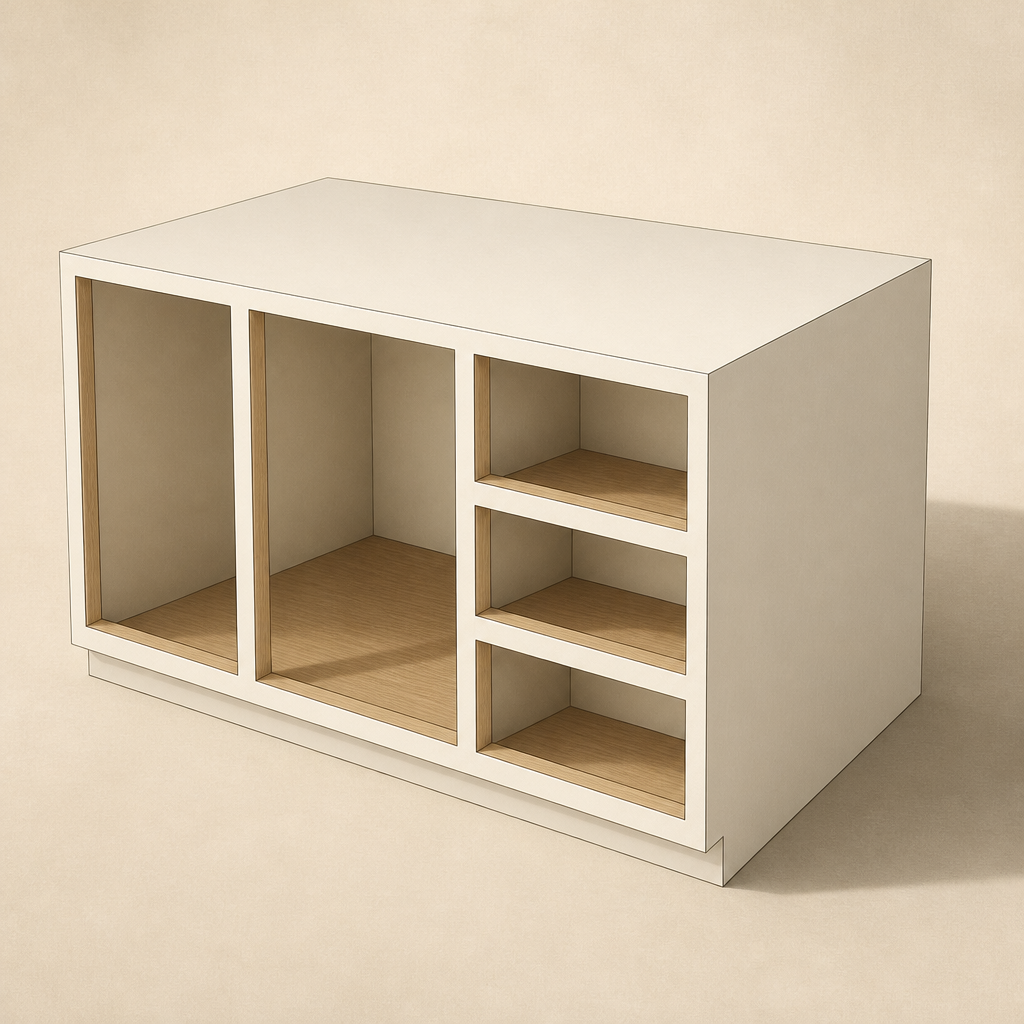
Most kitchens use face-frame construction. A wooden frame (typically about 1½ inches wide) is attached to the front of the cabinet box, framing the opening like a picture frame. Overlay describes how much of that frame the door or drawer front covers. Inset is the alternative approach where the front sits inside the frame instead of on top of it. Frameless (European-style) cabinets skip the face frame entirely and are always full overlay by nature.
Standard Overlay: The Budget-Friendly Classic
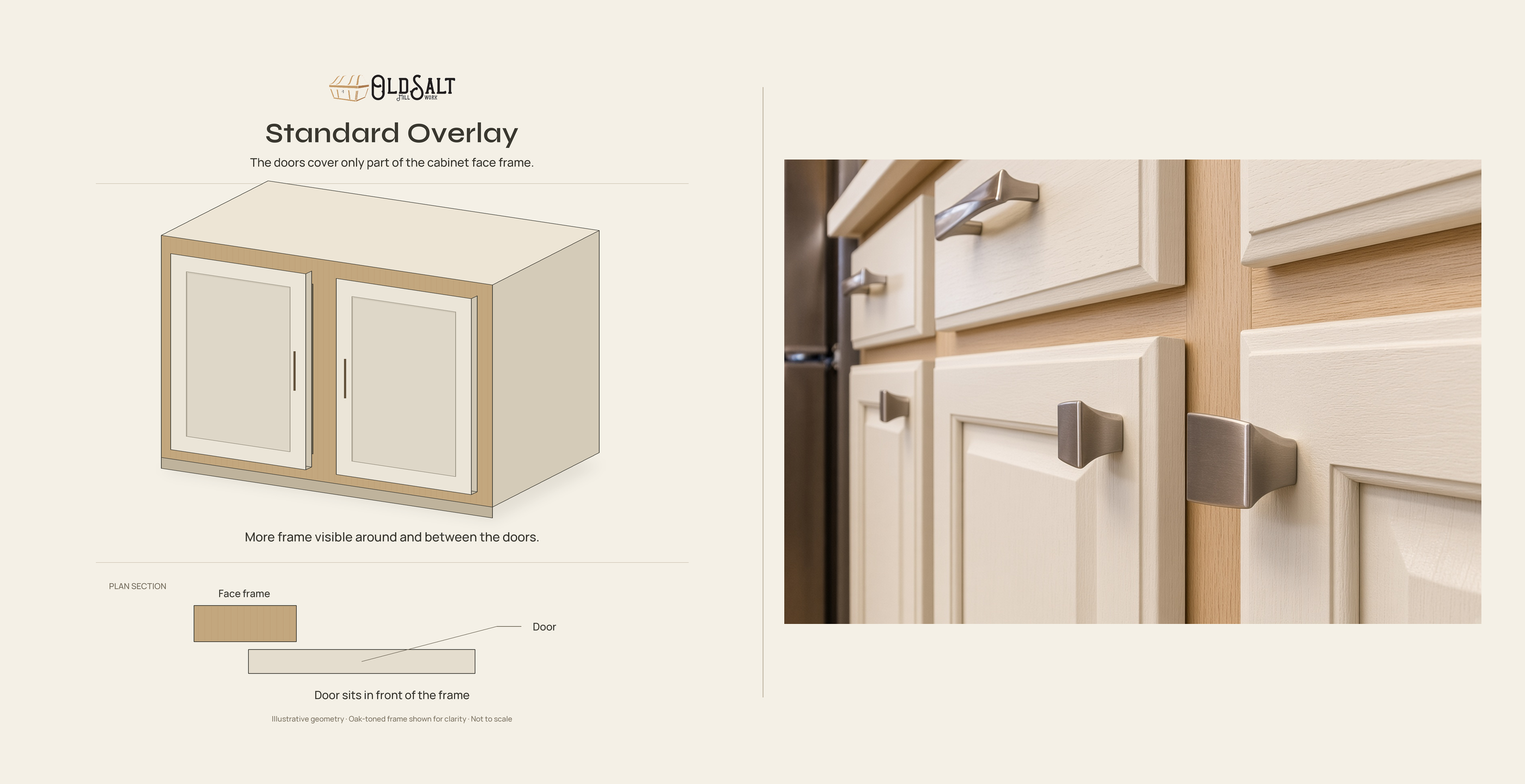
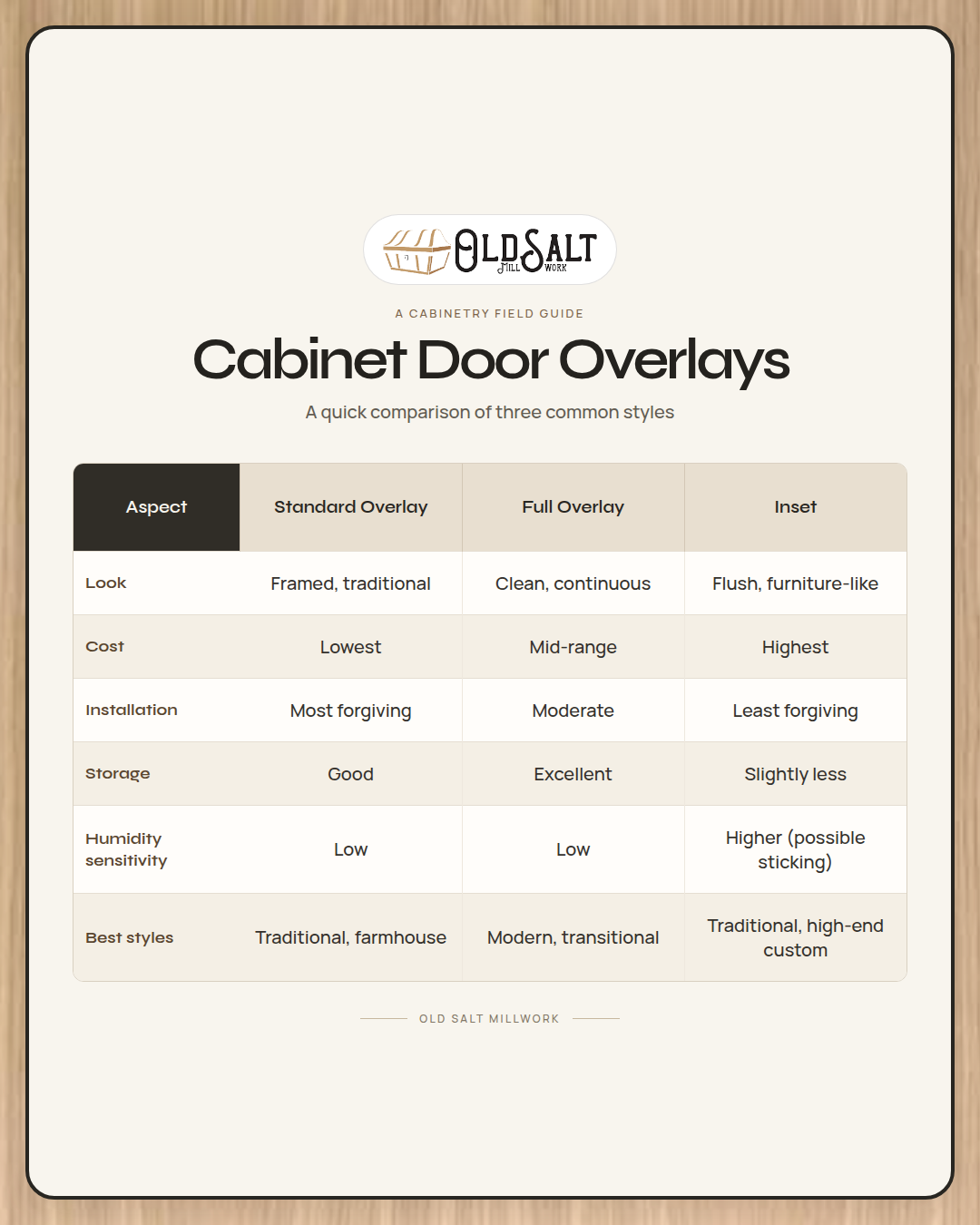
Standard (or partial) overlay is the most common builder-grade option. The doors and drawer fronts cover only part of the face frame, leaving a visible strip—often ½ inch to 1 inch or more—of the frame showing between and around each door. This creates a more segmented, framed appearance.
It is the most affordable of the three because the doors are smaller (using less material) and the wider gaps are more forgiving of minor alignment issues during installation. It works well with traditional, cottage, and farmhouse styles, especially raised-panel or cathedral doors. Hardware can sometimes be optional or simpler, and the exposed frame adds visual breaks that can feel cozy. The downside is that it can look dated in contemporary spaces and doesn’t convey the same sense of custom craftsmanship. Storage access is slightly reduced by the frame compared with frameless designs.
Full Overlay: Clean Lines Without the Premium Price
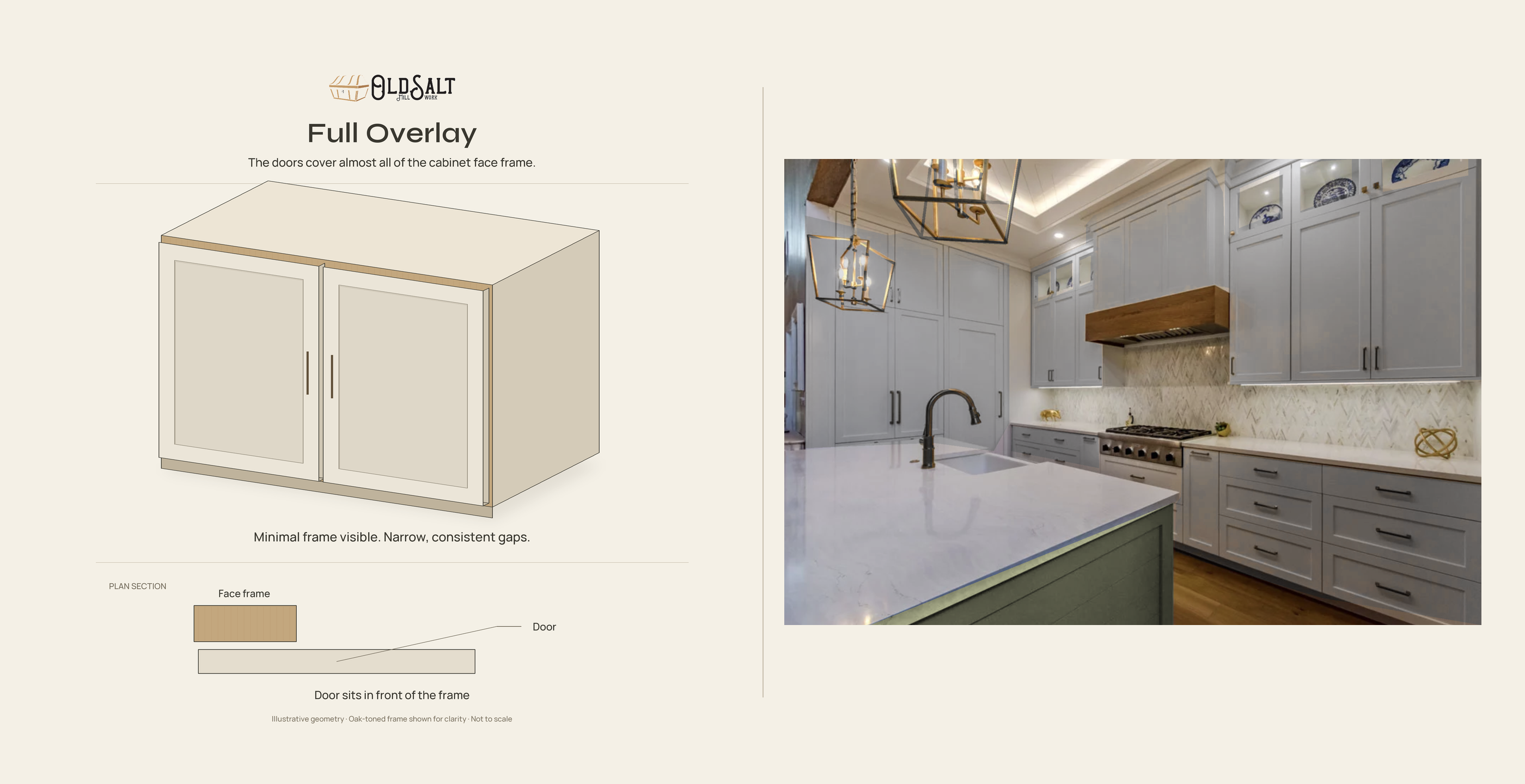
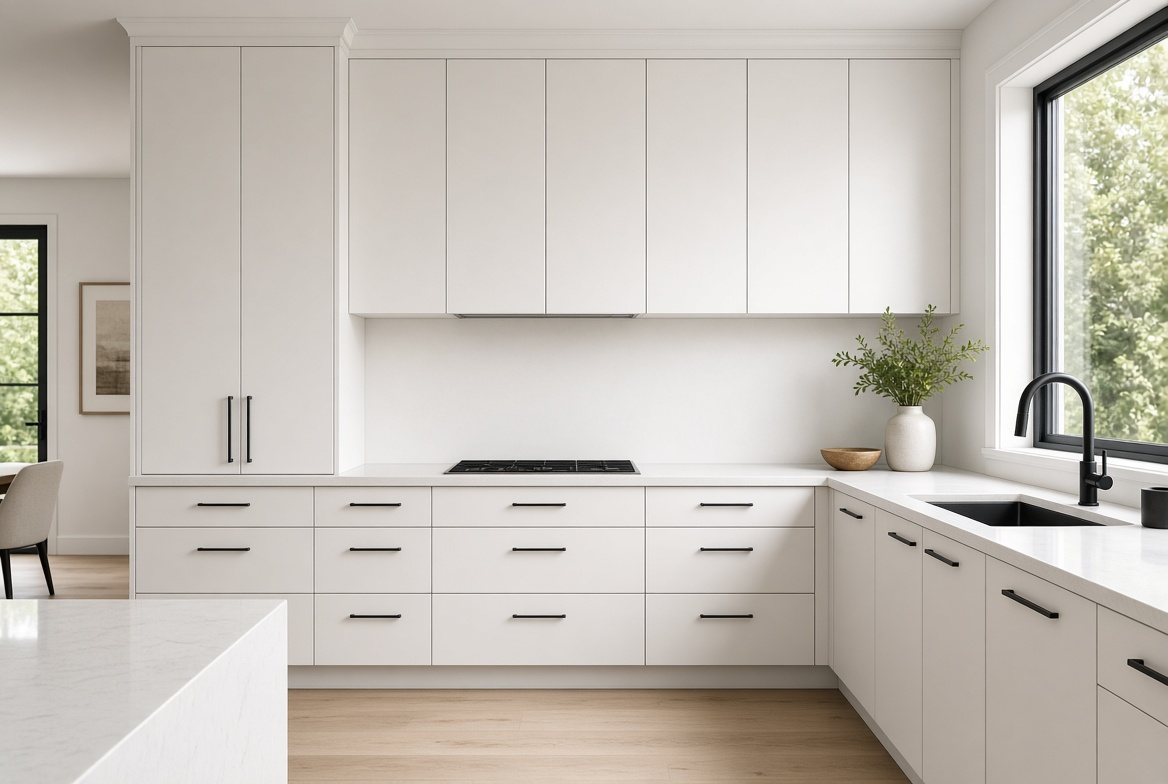
Full overlay steps up the finish. Doors and drawer fronts cover nearly the entire face frame (or the edge of a frameless box), leaving only a slim, consistent gap—typically ⅛ to ¼ inch—between neighboring doors. The result is a smoother, more continuous wall of cabinetry that feels higher-end and modern or transitional.
This style is popular because it delivers much of the clean aesthetic of custom work at a moderate price. It works on both face-frame and frameless cabinets, maximizes the visual impact of the door style itself (whether shaker, slab, or something more detailed), and generally provides excellent storage access. Concealed hinges are standard. Alignment needs to be more precise than with partial overlay, but it is still more forgiving than inset. Full overlay is the sweet spot for many renovations that want a polished look without jumping to the highest price tier.
Inset: The Furniture-Quality Choice
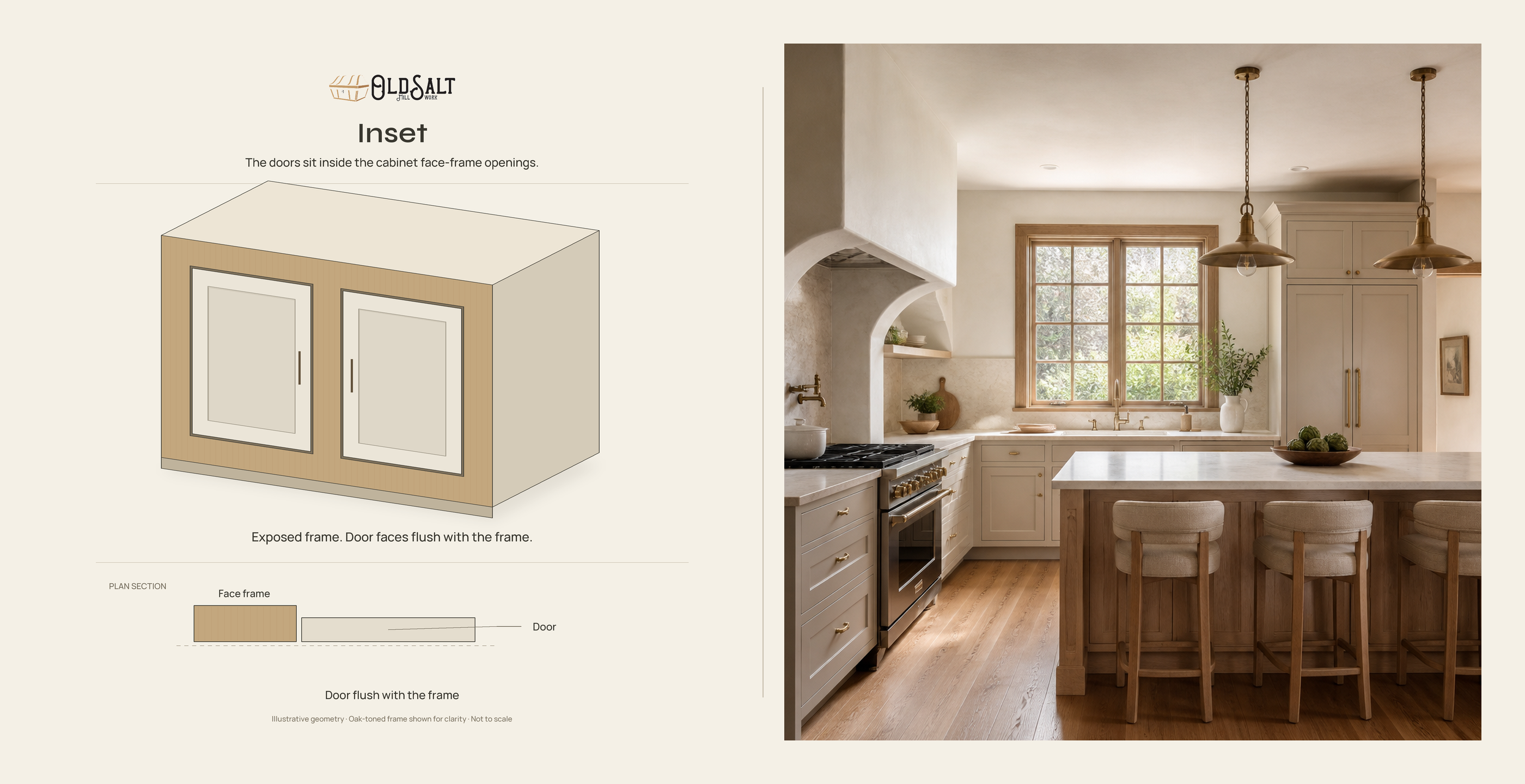
Inset cabinets are the most refined and expensive option. The doors and drawer fronts sit inside the face frame, flush with its front surface, with a narrow, even reveal (often around 1/16 to ⅛ inch) all the way around. When closed, the cabinet face reads as a single flat plane, much like fine built-in furniture.
This precision is why inset commands a premium—often 15–30% or more above comparable overlay cabinets. Every door must be fitted individually to its opening, installation must be square and level, and seasonal wood movement in humid climates can cause doors to stick or rub, requiring occasional adjustments. Storage is slightly reduced because the frame and the door’s position take a bit of interior space. The payoff is a sophisticated, timeless look that signals custom quality. Inset shines in traditional, Shaker, historic, and high-end transitional kitchens where the cabinetry itself is a design feature. Hinges can be concealed or decorative and exposed.
Choosing and Mixing
Choose standard overlay for budget-conscious updates or when you want a classic framed look and don’t mind the more segmented appearance. Full overlay is the versatile everyday choice for most modern or transitional homes that want clean lines and strong value. Inset is worth the investment when the goal is a refined, custom or furniture-quality result and the budget (and installer skill) can support the tighter tolerances.
Many designers mix them thoughtfully: inset on a prominent island or range wall for impact, with full overlay elsewhere, or full overlay in the kitchen and standard overlay in a utility space. Keeping door style, finish, and hardware consistent helps the different constructions read as intentional rather than mismatched.
Understanding these three approaches removes the mystery behind why some cabinets look expensive and others don’t. The difference is largely about how the doors meet the box—and how much precision (and budget) you’re willing to invest in that relationship. Once you know what you’re looking at, you can choose the style that matches both your aesthetic and your practical needs.