A well-designed custom closet does more than look polished. It removes friction from the start of your day.
The simplest high-impact principle is to organize by frequency of use: hang everyday clothes at eye level, store seasonal pieces higher up, and keep small accessories in drawers or bins. This single shift keeps mornings fast and the space tidy because you reach for what you actually wear instead of hunting through everything you own.
Most people wear a small fraction of their wardrobe regularly. Organizers and closet designers often cite the 80/20 observation: roughly 20 percent of clothes account for about 80 percent of wears. The New York Times has covered how professionals start with inventory and editing rather than aesthetics alone, because an efficient layout depends on knowing what you truly need. When daily pieces sit at prime height and rarely worn items move out of the way, decision time drops and the closet stays easier to maintain.
“We approach closets like we would a boat. Every nook and cranny is utilized.” - Kelly Wearstler
Kelly Wearstler made a poignant statement about the design philosophy in her Architectural Digest feature. She emphasized treating the space with the same rigor as any other room—using full height, thoughtful hardware, and layered storage so nothing is wasted. Architectural Digest noted how she equips dressing areas with rolling ladders for high shelves, shallow drawers for visibility, and mixed open and closed storage. Frequency zoning fits naturally into that mindset: the most-used real estate (roughly eye to waist level) becomes your daily zone, while upper shelves and less reachable rods hold seasonal or occasional pieces.
How do I actually organize my closet by frequency of use?
Pull everything out and sort into three groups: items worn at least a few times in the past three months (your daily/weekly pieces), items used occasionally, and true seasonal or special-occasion pieces. Hang the daily group front and center at comfortable eye-to-waist height so your hand goes there automatically. Place occasional clothing on side rods or slightly higher shelves, and move seasonal coats, formalwear, and off-season knits to the highest shelves or into labeled bins. Use drawers or shallow bins for belts, scarves, jewelry, and other small items that otherwise create clutter. This zoning matches how you actually dress rather than forcing a color or category system that ignores real habits.
Build the Zones
Start by pulling everything out. Sort into three groups: items worn at least a few times in the past three months (daily/weekly), pieces used occasionally, and true seasonal or special-occasion items. Hang the daily group front and center at comfortable reach. Shirts, work pants, favorite jeans, and current-season basics belong here. Use a second rod below or above for shorter items so you gain linear footage without expanding the footprint.
Place occasional clothing—dressier separates, secondary shoes, or transitional layers—on side rods or slightly higher shelves. Seasonal coats, formalwear, and off-season knits go highest or into labeled bins on the top shelf. Drawers or shallow bins handle the small things that otherwise create clutter: belts, scarves, jewelry, and undergarments. Shallow drawers lined with fabric keep contents visible at a glance, a detail Wearstler has recommended so you avoid digging.
Celebrity closet designer Lisa Adams of LA Closet Design stresses that everything needs a designated place and that visibility matters. In interviews she has advised against deep stacks and prefers filing folded items front-to-back or using dividers so you can see what you own. She also recommends regular editing—if something doesn’t fit or has a permanent stain, it leaves—so the frequency zones stay accurate over time. MyDomaine has highlighted her approach of mixing custom elements with accessible solutions so the closet functions like a boutique rather than a storage room. She also wrote a great post on her blog that summarizes the approach.
Practical Layout Details
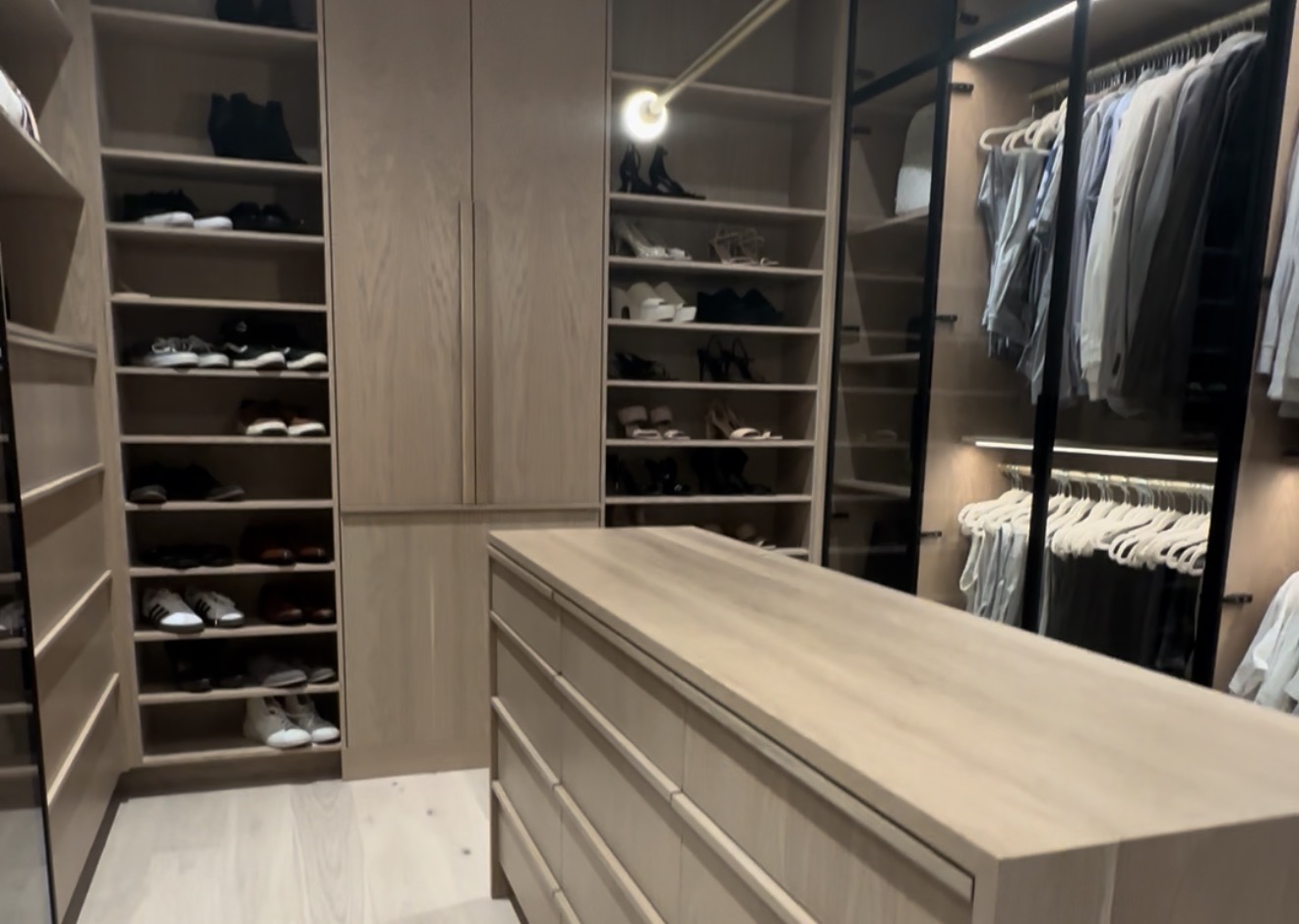
Measure twice. A standard reach-in benefits from double hanging: one rod around 40–42 inches from the floor and another higher. Walk-in spaces can add an island or center unit for accessories while keeping perimeter hanging clear. Lighting is non-negotiable; warm LEDs along rods or under shelves eliminate the dark corners where clothes disappear. Valet rods (pull-out bars) give temporary hanging space for planning outfits or airing dry cleaning without permanent clutter.
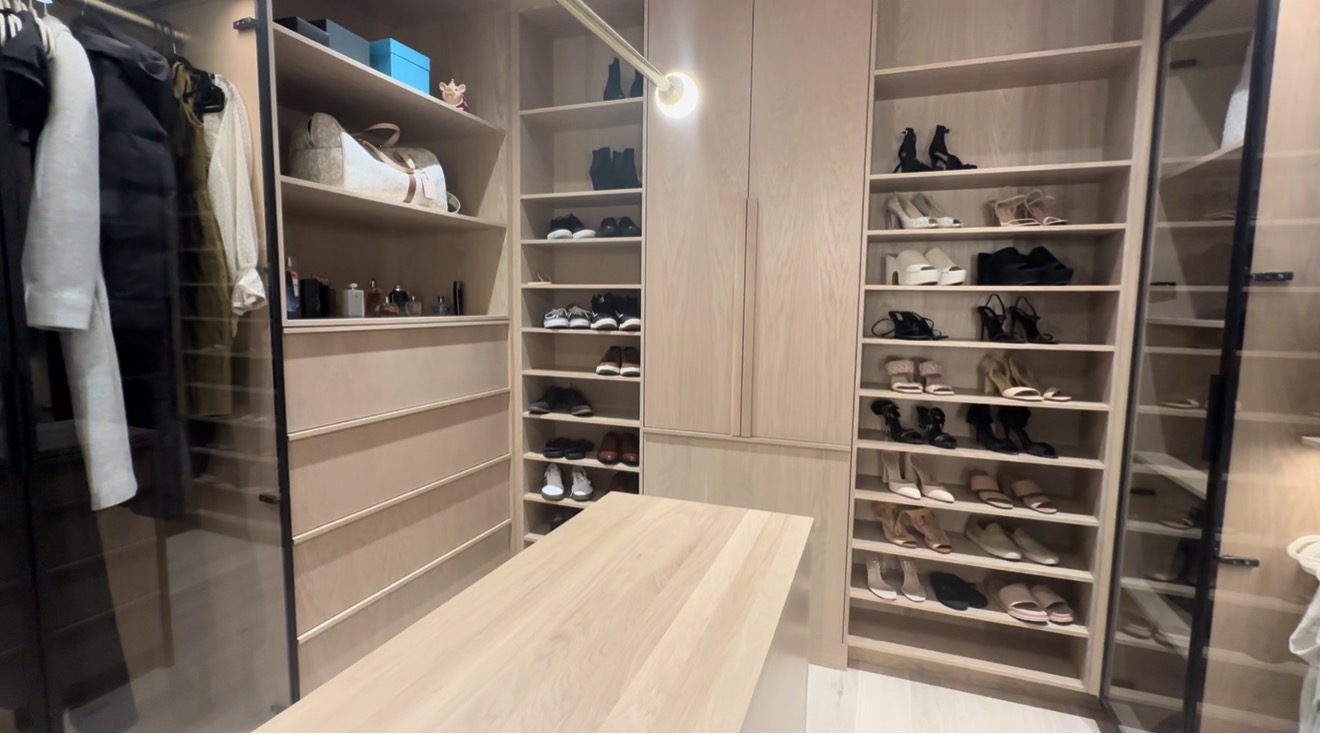
Accessories deserve dedicated real estate near the daily zone. A shallow jewelry drawer at eye level, belt hooks on a side wall, and shoe shelves (or racks) at floor level keep finishing pieces within reach. For handbags, adjustable shelves or glass dividers let you arrange by color or material without wasted space—another technique noted in Wearstler’s closet advice.
Keep It Working
Frequency organization only lasts if you maintain the edit. Once a season, or whenever the closet feels heavy, revisit the zones. The backward-hanger trick is useful: turn hangers around when you wear something; after a month or two, anything still reversed is a candidate for donation or higher storage. Ten minutes a week—returning items to their zone and straightening stacks—prevents the annual overhaul.
A custom closet designed this way becomes an extension of how you actually live. As New York interior designer Jessica Schuster has put it, a closet should never be an afterthought because your clothes are part of how you present yourself. The New York Times quoted her emphasizing that the space should feel like a continuation of the home. When everyday pieces are easy to see and reach, seasonal items are protected but accessible, and accessories stay contained, the morning routine shortens and the visual calm lasts.
Whether you are planning a full custom build or refining an existing reach-in, start with frequency. Place the clothes you wear most where your hand naturally goes, elevate what you need less often, and give the small stuff a proper home. The result is a closet that supports your days instead of slowing them down. Contact us on how we can help you or use the planning room to start the process.