
Field guide / 03Trade desk

    Architectural Woodwork Institute / aesthetic grades

    Grade the room.
    Not the ambition.

    Economy, Custom, and Premium are not a good / better / best sales ladder. They are a way to make visual expectations legible before material is ordered, drawings are released, and the work reaches the room.

    Read the grades
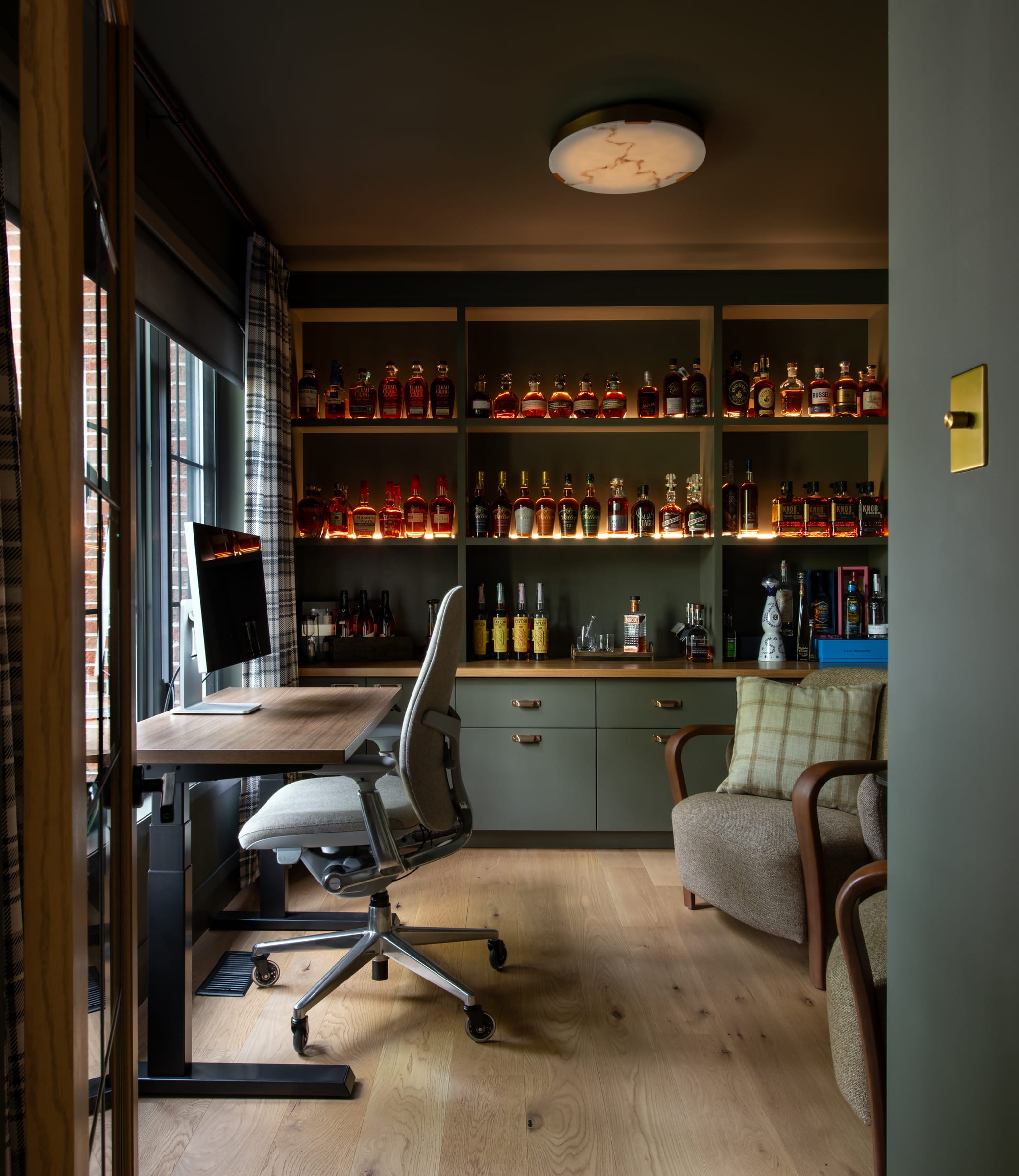
    Architectural millwork fitted into a quiet commercial interior01 Specification to built work
    02

    A useful distinction

    Aesthetic grade sets the visual envelope. It does not replace the specification.

    AWI quality standards establish requirements for architectural woodwork, including aesthetic grades. The grade is one decision inside a larger package: substrates, veneers or laminates, coatings, hardware, construction, performance, installation, and the details that make the work fit the building.

    For a shop, the important question is not “Which grade is best?” It is “Where does the eye land, and how much control does this room need?” That answer should be visible in the drawings, schedules, finish language, and coordination conversations.

    03 / The three grades

    Read across the room
    01

    A practical visual field

    Economy

    Economy is suited to work where the overall appearance is important, but some natural variation and less restrictive visual requirements can remain visible. It is not a shortcut around sound construction; it is a deliberate choice about how much visual selection and control the project needs.

    • Useful where the room is not asking every surface to read as a single, quiet field.
    • Allows more natural variation than the higher aesthetic grades.
    • Often appropriate when scope and budget need to stay disciplined without inventing a false hierarchy of quality.

    Think about the whole room first: service areas, back-of-house work, robust interiors, and places where material variation belongs in the composition.

    02

    The considered middle

    Custom

    Custom is the grade many projects actually need: a controlled, intentional appearance without requiring the most restrictive selection at every exposed surface. It gives the team room to coordinate the visual result with the architecture, adjacent materials, and the way the space will be used.

    • Balances appearance, material selection, and project economics.
    • Works well when the drawings carry a clear design intent but the room does not demand absolute uniformity.
    • Benefits from early agreement on what is exposed, what is adjacent, and what the finished work should read as from the room.

    Custom is not a compromise by definition. It is often the most accurate description of a well-resolved, properly coordinated interior.

    03

    The tightest visual control

    Premium

    Premium is for spaces where the visible work is expected to be especially consistent and carefully selected. It places the greatest emphasis on appearance and visual control, which means the specification, material availability, mock-ups, sequencing, and review process need to support that ambition.

    • Appropriate where continuity, matching, and a quiet visual field carry real design weight.
    • Requires the team to identify the surfaces and transitions that will be judged most closely.
    • May affect material selection, yield, lead time, review points, and cost; those effects should be discussed before fabrication.

    Premium is not a universal upgrade. It is a precise tool for rooms where the eye will stay on the work.

    04 / How to choose

    Start with the room, then work back to the grade.

    01

    Visual control

    Which surfaces are in the primary field of view? Are grain, colour, joints, or matching central to the design?

    02

    Coordination

    What happens at returns, reveals, fillers, doors, hardware, adjacent trades, and transitions between materials?

    03

    Specification

    Are the intended materials, finish, construction, and grade written clearly enough for the shop to price and build the same thing?

    04

    Budget and sequence

    What do selection, yield, mock-ups, approvals, lead time, and installation mean for the actual project—not just the finish schedule?

    05 / Old Salt’s read

    All three grades.
    One accountable shop.

    Old Salt can execute Economy, Custom, and Premium aesthetic-grade requirements. We do not treat the grade as a label to add after the design is finished. We use it to ask better questions early: what must match, where can material speak naturally, what needs a sample or mock-up, and which details will determine fit in the field.

    Bring us the drawings, finish schedule, or an early specification. We will help turn the intended level of visual control into a package the shop can coordinate, price, fabricate, and install.

    Bring a package to the shop

    06 / Primary sources

    Read the standard at the source.