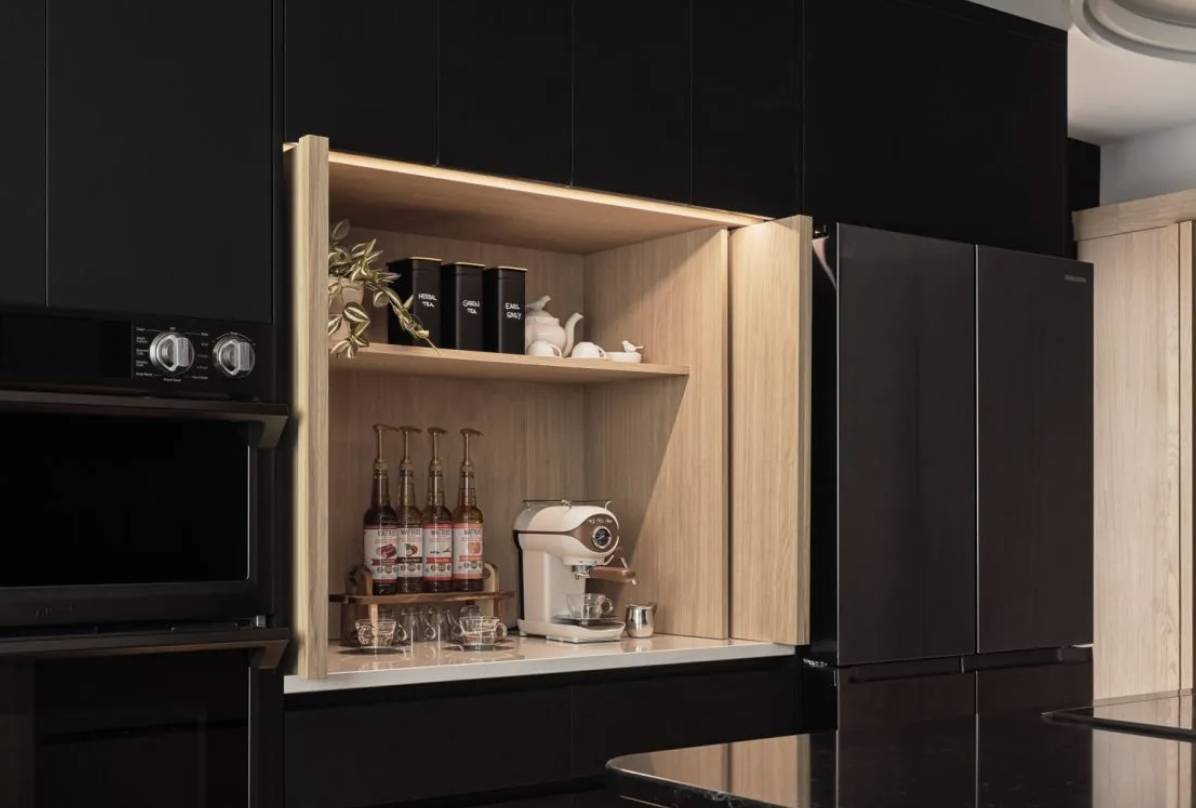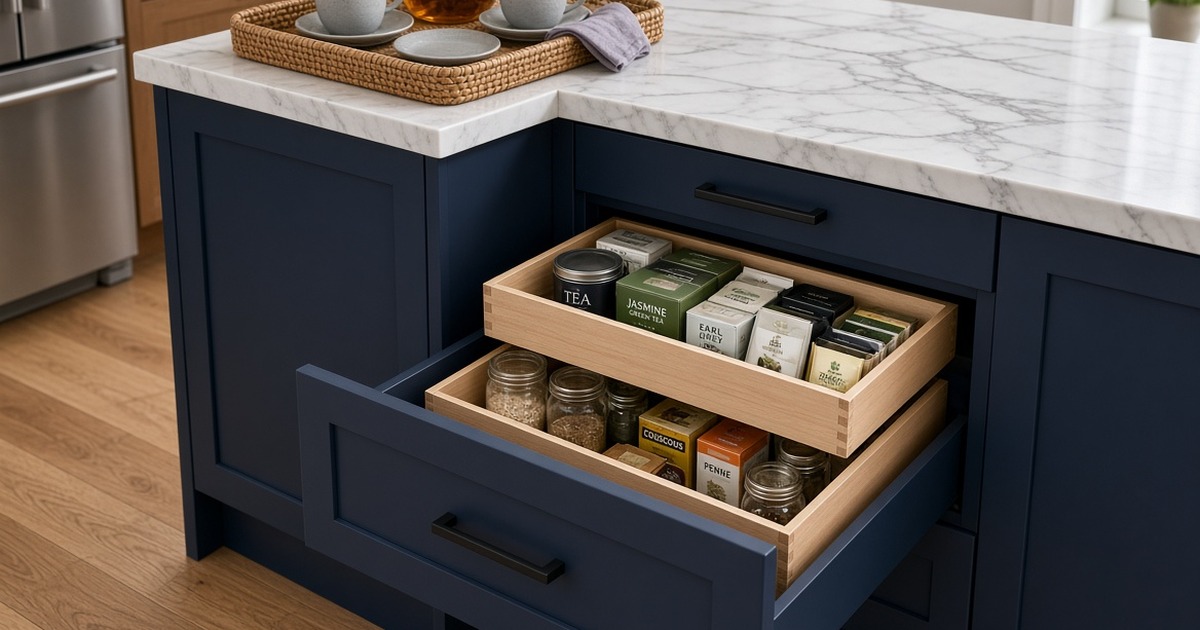
The best storage is not always the storage you notice first.
Back in 2017, we came across this great piece in Architectural Digest, which became a bit of inspiration in the shop when we're designing and building a kitchen, particularly a small one.
Hidden drawers can make cabinetry more useful without disturbing the visual rhythm of a room. They can sit behind a larger drawer front, inside a cabinet, beneath a built-in bench, or in the recessed toe-kick area near the floor. When they're planned well, they create another layer of organization while allowing the exterior cabinetry to remain calm and consistent.
The term “hidden drawer” covers several different ideas. Some are concealed for privacy, but most are simply designed to keep small items organized or use space that would otherwise be difficult to reach. They're practical features first. The best examples feel almost ordinary in daily use: easy to open, appropriately sized, and located exactly where their contents are needed.
Design is not just what it looks like and feels like. Design is how it works." — Steve Jobs
What counts as a hidden drawer?
A hidden drawer is any drawer that is not immediately visible as a separate component when the cabinetry is closed. In a conventional cabinet, every drawer usually has its own front, handle, and horizontal reveal. A hidden drawer places one storage layer behind another exterior element.
A common example is a shallow cutlery tray mounted above a deep utensil drawer. From the room, the cabinet appears to have one large drawer. After it opens, the smaller inner drawer becomes visible and can move independently. Similar interior drawers are used in vanities, closets, home offices, bars, and pantry cabinets.
Why use one?
Hidden drawers are most valuable when they solve a specific problem. A wide, deep drawer is excellent for cookware, but it is inefficient for measuring spoons, knives, or small accessories. Adding a shallow interior level keeps those objects visible without sacrificing the large drawer below.
They can also protect the proportions of a design. Contemporary cabinetry often depends on long, uninterrupted surfaces. Traditional built-ins may need door and drawer fronts to align with architectural details elsewhere in the room. In either case, several small exterior drawers could make the composition feel busy. Concealing some storage allows the interior to work harder while the exterior remains orderly.
The most useful hidden-drawer arrangements
Inner drawers
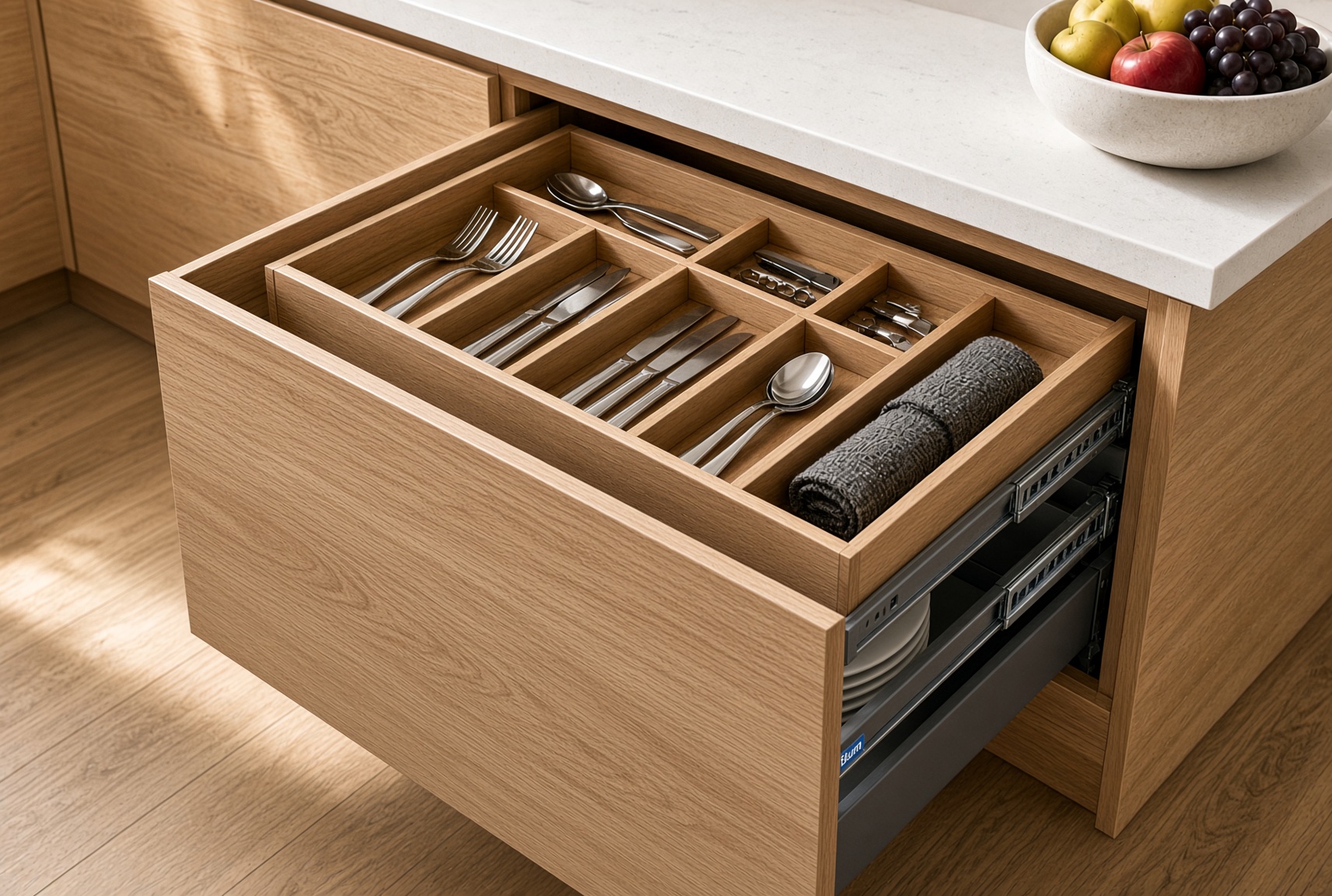
An inner drawer sits within a larger drawer opening. A shallow tray usually holds smaller objects while the main drawer carries larger items below. This arrangement works well for cutlery and cooking tools, grooming products and towels, or jewellery and folded clothing.
Roll-outs behind doors
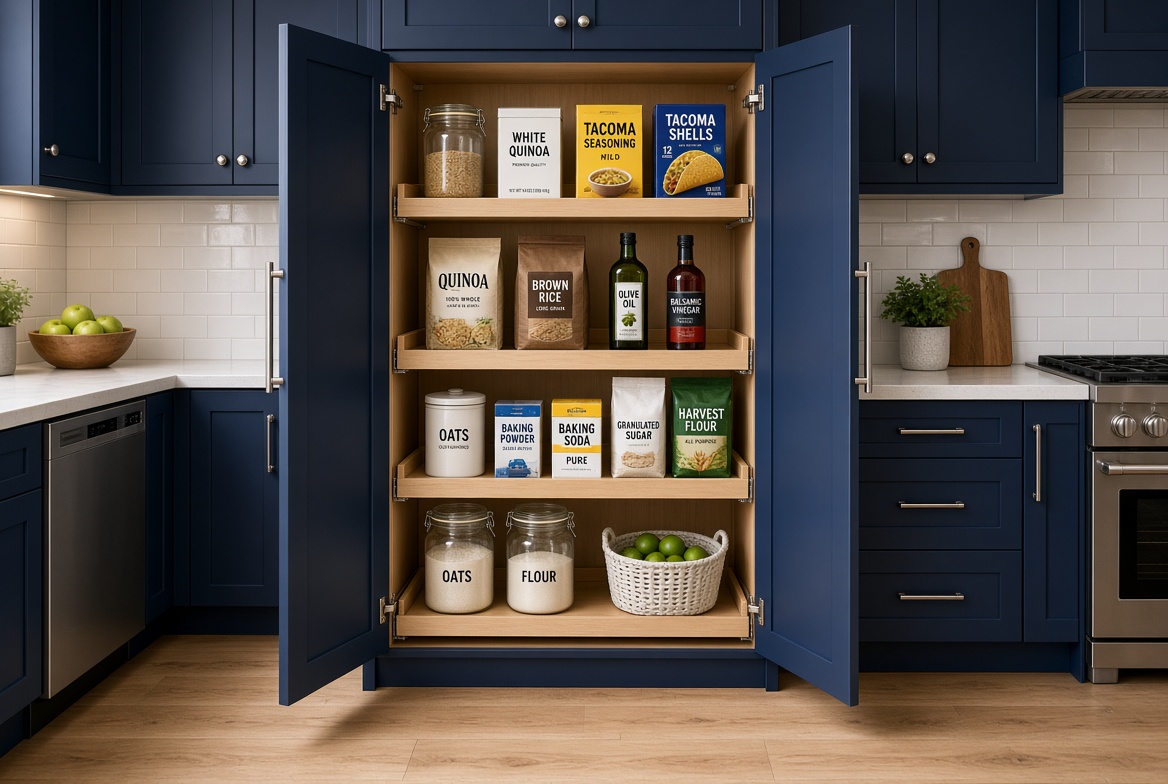
Roll-out drawers are frequently installed inside pantries and utility cabinets. The exterior presents a full-height door, while the interior contains several independent trays. Compared with fixed shelves, roll-outs make items at the back much more accessible.
This arrangement requires careful clearance planning. Doors must open far enough for the drawers to pass without striking hinges, handles, or adjacent cabinetry. The height between trays should also reflect what will actually be stored. A collection of cereal boxes needs a different layout than small jars or folded linens.
Toe-kick drawers
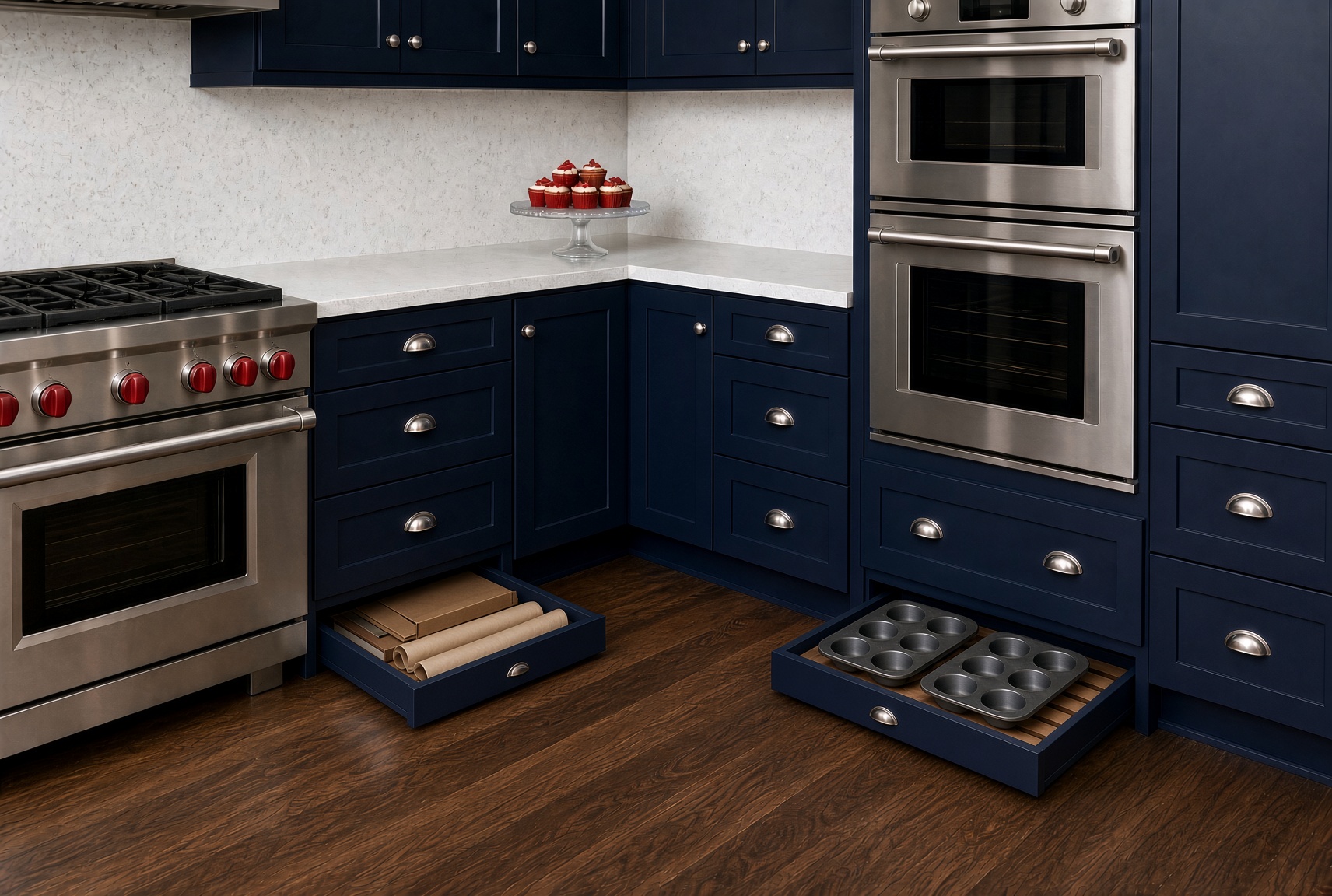
The toe kick is the recessed space at the bottom of a base cabinet that gives your feet room while standing at a counter. Part of that cavity can sometimes hold a shallow drawer. Because it is low and close to the floor, it is best reserved for flat, occasional-use objects rather than everyday essentials.
Good candidates include baking sheets, serving trays, placemats, instruction manuals, art supplies, or spare hardware. The cabinet must retain comfortable foot clearance, and the drawer front needs enough space to avoid scraping the finished floor. A tight closure is also important because storage near the floor is more exposed to dust.
Hardware determines how well it works
Hidden drawers depend on precise hardware. Full-extension slides allow the back of a drawer to move into view. Soft-close mechanisms control the last part of its travel, while undermount slides keep hardware out of sight. The correct choice depends on the drawer’s width, depth, expected weight, and frequency of use.
A wide drawer filled with cookware requires a much higher load rating than a shallow jewellery tray. If the slides are undersized, the drawer can sag, bind, or wear prematurely. Hardware also consumes space, so clearances must be included in the cabinet design from the beginning rather than improvised during installation.
Push-to-open hardware can eliminate a visible pull, but it is not automatically the best option. It requires accurate alignment and enough room for the front to move inward before releasing. In busy areas, leaning against the cabinetry may open it accidentally. A discreet edge pull or finger recess is often simpler and more dependable.
What should go inside?

The contents should determine the drawer, not the other way around. Before adding hidden storage, identify the objects it will hold, how often they are used, and where the user will be standing when reaching for them. Useful applications include:
Cutlery, knives, or measuring tools above a deeper utensil drawer
Charging cables and small electronics inside a desk or kitchen cabinet
Jewellery, watches, and accessories within closet cabinetry
Flat trays, linens, or seasonal items in a toe-kick drawer
Hidden storage is less successful when it becomes a place for miscellaneous objects that have no clear home. If people forget the drawer exists, or if accessing it requires several awkward movements, it is adding complexity rather than improving the room.
Planning a hidden drawer
Start with a simple question: what problem should this drawer solve? From there, consider the size and weight of its contents, how often it will be opened, and whether another door or drawer could block it. The user should be able to see and reach everything inside without an awkward sequence.
Hidden does not need to mean complicated
The best hidden drawers are often quiet, straightforward features. They preserve a clean exterior, organize objects according to size, and make overlooked space useful. Their value is measured by how naturally they fit into the room and how easily they become part of a daily routine.
That is the advantage of custom cabinetry: not adding a mechanism simply because it is possible, but deciding where another layer of storage will genuinely improve the way the room works.